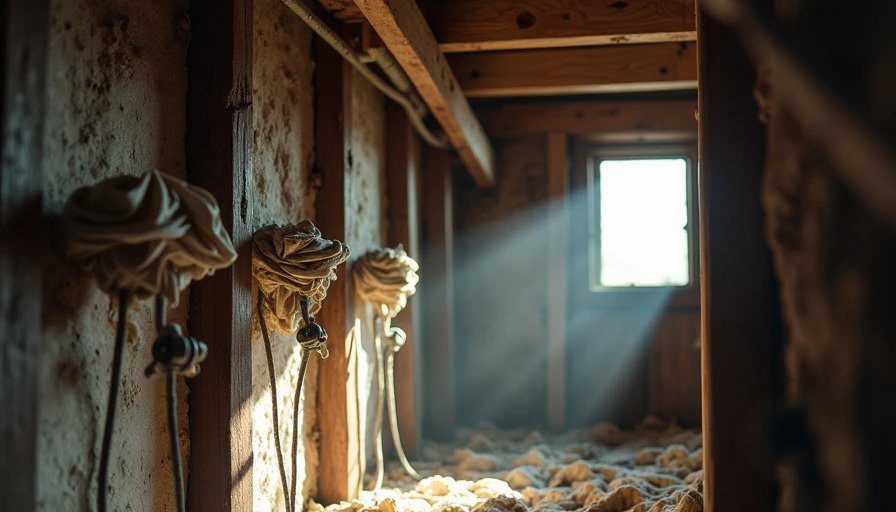
Knob-and-tube wiring. You hear the term and think old-house horror story. Some folks panic and want it ripped out yesterday. Others ignore it until insurance drops them or a breaker trips constantly.
After 38 years running crews in Cleveland, I've seen both. It's not automatically going to burn your house down tomorrow, but it's no joke with today's appliances and insurance rules.
In 1920s Colonials and similar Rust Belt stock, it's common. Here's the straight truth on when it's a problem and what to do.
What Knob-and-Tube Actually Is
Two separate copper wires — hot and neutral — held apart by porcelain knobs and run through porcelain tubes where they pass through framing. No ground wire. No sheath like modern Romex.
It was state-of-the-art in the early 1900s. Wires spaced apart dissipate heat well into open air. Thicker copper than some modern stuff. Porcelain lasts forever.
But it was built for a house with a few lights and maybe a radio. Not dishwashers, microwaves, computers, EVs, and air conditioning.

The Real Risks in Cleveland Old Houses
Overheating and Fire
Modern loads push it hard. Insulation wrapped over it traps heat — big no-no. Cloth insulation dries out, cracks, and falls off, exposing live wires.
In Cleveland's humidity and temperature swings, that happens faster. I've opened walls where wires were bare and sagging. Not pretty.
No Grounding
Biggest modern issue. No ground means higher shock risk and no protection for electronics or GFCI/AFCI needs. Many appliances won't play nice.
Insurance and Sales
Lots of companies won't insure or charge huge premiums with active knob-and-tube. Selling? Buyers and lenders get nervous. I've seen deals fall through over it.
Degradation
Brittle insulation, cracked porcelain from movement, connections that loosen over decades. Add any DIY "improvements" and it gets ugly.
That said, untouched knob-and-tube in low-load areas can still be okay if the insulation is intact and nothing's been covered.
When to Replace It (And When You Can Wait)
Don't panic if it's only in the attic for lights or unused circuits. But if it's serving the kitchen, bath, or main living areas with modern use? Plan the work.
Replace if:
Insulation is cracking or missing.
You're doing a major remodel and walls are open anyway.
Insurance requires it or rates are killing you.
Adding high-draw appliances or circuits.
Any signs of arcing or burning smells.
Live with it (temporarily) if:
Pristine condition, low load.
You're not insulating those areas.
Budget is tight and you prioritize roof or foundation first.
I tell people: Prioritize the parts you actually use heavily.
The Cost Reality in 2026 Cleveland
Full house rewire isn't cheap. Expect $12,000 to $35,000+ for a typical 1,500-2,500 sq ft old house. $8–$20 per square foot depending on access and scope.
Partial? Kitchen and bath circuits might run $4k–$12k. Much smarter than full gut if done right.
Factors that drive price:
How much wall/ceiling opening needed.
New panel and service upgrade.
Fishing wires vs opening everything.
Asbestos or lead paint surprises.
In old Colonials, fishing new wire saves money but isn't always possible. Good electricians know the tricks.
Breakdown Table (Typical 2,000 sq ft Cleveland Colonial)
Scope | Cost Range | Notes |
|---|---|---|
Full House Rewire | $18k–$35k | New panel, most circuits |
Targeted Areas (Kitchen/Baths) | $6k–$15k | Highest use zones |
Panel + Service Upgrade | $3k–$8k | Often needed anyway |
Add AFCI/GFCI Protection | $1k–$3k | Code and safety |
Get multiple bids from guys who know old houses. Cheap electricians cut corners on this.
How a Proper Replacement Gets Done
Don't just "replace" it sloppily.
Assessment — Electrician walks the whole house, maps existing.
New Panel — Usually 200-amp with modern breakers.
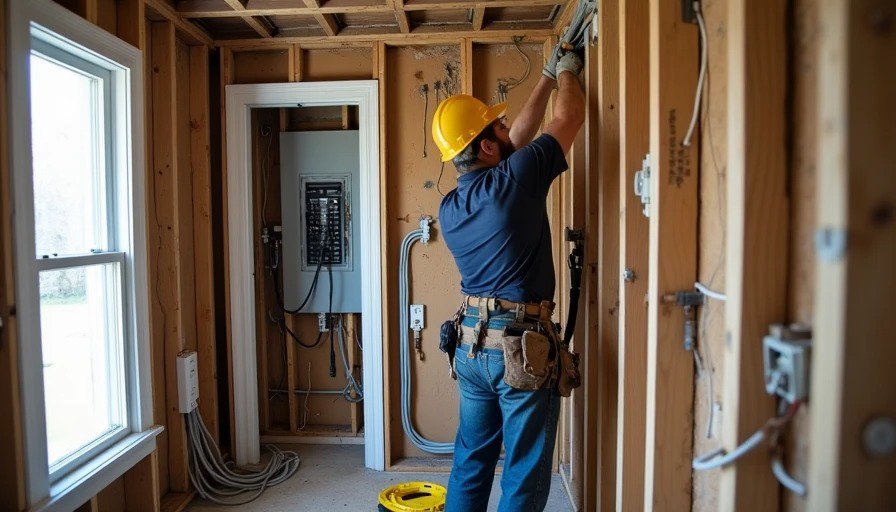
Run New Circuits — Romex or conduit where needed. Leave old wires in place if inaccessible (de-energized).
Grounding — Add where possible.
AFCI/GFCI — Required in many areas now.
Inspections — Pull permits. Do it right.
During a remodel, it's easier and cheaper because walls are already open.
I’ve seen homeowners try DIY or cheap fixes. Usually ends with me or another crew fixing it later.
Insurance and Selling Angle
Check with your insurer now. Some require upgrades for coverage. When selling, disclose it. Many buyers in Cleveland old-house market expect some work, but active knob-and-tube scares lenders.
Upgrading helps resale value more than it costs in most cases.
My Own Experience
My 1920s Colonial still has some knob-and-tube in low-use spots. I replaced the kitchen and main circuits years ago. The rest? I monitor it and don't overload. But I know it's on the list.
One job back in the day: Client had it throughout. We did partial during bath remodel. Saved money. House is still standing fine.
Another: Ignored too long. Overheated wire caused issues. Learned to respect it.
Smart Ways to Handle It Without Bankruptcy
Phased Approach: Do high-use areas first.
During Other Work: Time it with kitchen or bath renos.
New Circuits Only: Add dedicated lines for big appliances.
Monitor: Smoke detectors, regular checks by electrician.
Budget Contingency: Build it into your overall reno plan.
Don't let it stop you from buying an old house you love. Just plan.
Knob-and-tube isn't as scary as some say if it's in good shape and lightly loaded. But it's outdated, ungrounded, and risky for modern life in Cleveland winters with all our gadgets.
Replace the critical parts. Leave the rest if it's pristine. Get a good electrician who knows old houses, not the cheapest guy with a truck.
Do it smart and your old Colonial will serve you for decades more.
Next I'll talk cast iron drains — they'll outlast you but still cause headaches.
Of course, I've screwed up plenty of jobs too. That's why I'm telling you this.
No signatures yet — be the first!